More than 60 countries have integrated migrants into health policies, according to a new WHO report, signaling progress in global healthcare inclusion.
According to a global report released on Thursday, two-thirds of surveyed nations have adopted more inclusive approaches, marking what the agency describes as a major shift in addressing migrant health needs.
The findings are based on data from 93 Member States and establish the first global benchmark for tracking progress toward migrant-responsive health systems.
“More than 60 countries, two-thirds of those surveyed, now include them in their national health policies and laws,” the report states.
Migration remains a defining global trend, with over one billion people, more than one in eight worldwide, living as refugees or migrants.
The report highlights that people move for a variety of reasons, including conflict, disasters, economic opportunities, education and family reunification. However, many continue to face challenges in accessing healthcare services.
These include barriers to care, increased exposure to infectious and chronic diseases, mental health risks and unsafe living or working conditions.
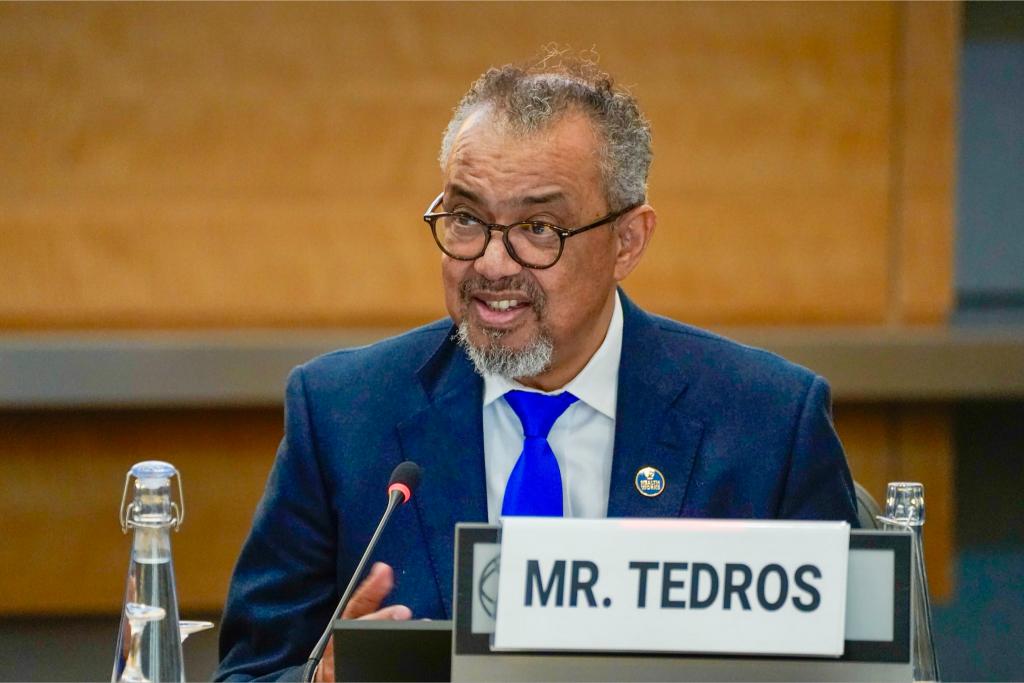
The WHO Director-General, Tedros Adhanom Ghebreyesus, emphasized the importance of inclusion in strengthening health systems globally.
“Refugees and migrants are not just recipients of care, they are also health workers, caregivers and community leaders,” he said.
He added that inclusive systems benefit entire societies.
“Health systems are only truly universal when they serve everyone, inclusion benefits whole societies and strengthens preparedness for future health challenges,” he said.
The report notes that investing in migrant health has broader social and economic benefits, including improved integration, stronger health system resilience and enhanced global health security.
Inclusive policies can also reduce long-term costs by enabling migrants to contribute more fully to their host societies.
Case studies from different regions illustrate how countries are implementing these changes.
These include expanded migrant health insurance coverage in Thailand, cross-cultural communication support in Belgium and the involvement of migrant communities in healthcare decision-making in Chile.
Despite the progress, the WHO warns that significant gaps remain.
“Only 37% of responding countries routinely collect, analyze and disseminate migration-related health data,” the report notes.
It also found that just 42% of countries include migrants in emergency preparedness plans, while fewer than 40% train healthcare workers in culturally responsive care.
Efforts to address misinformation and discrimination are also limited, with only 30% of countries implementing related communication campaigns.
Access to healthcare remains uneven, particularly for migrants in irregular situations, internally displaced persons and international students, who are less consistently covered by national systems.
The report also highlights limited participation of migrants in governance and decision-making processes, noting they remain under-represented in most countries.
To address these challenges, the WHO has outlined several recommendations for governments and partners.
These include embedding migrants in all national health strategies, improving data collection, strengthening cross-sector coordination and tailoring services to different migrant groups.
The organization also called for greater involvement of migrants in policy design and service delivery, alongside increased training for healthcare workers and efforts to combat misinformation.
The WHO said it will continue working with partners such as the International Organization for Migration, the United Nations High Commissioner for Refugees and the World Bank to advance coordinated approaches.
In a related development, the IOM has joined the WHO-backed Global Digital Health Certification Network, a system designed to enable cross-border verification of health records.
The collaboration is expected to improve access to secure and portable health documentation for migrants, supporting continuity of care across countries.
The WHO said it will continue supporting Member States to translate commitments into action, with a focus on building resilient and inclusive health systems for all.